

In Part 1, we examined the RAPIDE CLX III and the SPRINT CLX. The asymmetric front/rear rim heights and the adoption of carbon spokes were the biggest stories of the third-generation RAPIDE CLX lineup — a design pivot the industry took notice of.
The ALPINIST CLX III takes a slightly different path. It commits to carbon spokes, but sticks with a uniform 33mm rim height front and rear. Compared to the two models in Part 1, the ALPINIST CLX III may seem to lack a headline-grabbing technical story — yet given how much climbing defines Japanese roads, this wheel’s reason to exist is unmistakable.
In Part 2, we put the ALPINIST CLX III through real-world riding and clarify how the three wheels differ in character. Which one suits which rider, depending on body type and riding style — we lay out the criteria as we explore the cutting edge of road wheels.
Reviewer
 | Ryuji(@ryuji_ride) |
text & photo / Ryuji(@ryuji_ride)
edit / Tats(@tats_lovecyclist)
*The ALPINIST CLX III in this review was loaned by Specialized Japan and tested on the road over an extended period.
Inside the ALPINIST CLX III Design

When ROVAL launched the RAPIDE CLX series in 2020, the lightweight, climbing-oriented ALPINIST CLX arrived alongside it. While the RAPIDE chases a balance of low weight and aerodynamics, the ALPINIST CLX is built single-mindedly around weight savings — aimed at a different kind of rider.
The original ALPINIST CLX had a 33mm rim height. That symmetric design, with a 27mm external / 21mm internal rim width, has carried through every subsequent generation.
The 2022 second generation brought tubeless compatibility. Just as with the RAPIDE CLX II, this update preserved the wheel’s lightness while broadening tire choice and aligning the climbing wheel with current rider needs and trends.
Then, in 2025, the third generation arrived. The new ALPINIST CLX III follows the two RAPIDE-series models in committing to carbon spokes. Behind a design that looks fully devoted to weight savings, what technical evolution is actually at work?
Specs
| Rim height | 33mm (same front and rear) |
| Weight (set) | 1,131g |
| Internal rim width | 21mm |
| External rim width | 27mm |
| Spokes | ARRIS composite |
| Hub | Roval LF Hub with DT Swiss 180 EXP |
| Price | Front ¥180,400 / Rear ¥270,600 |
Rim Shape Carried Over
The ALPINIST CLX III is designed first and foremost for lightness and snap on climbs. The low 33mm rim height keeps overall wheel weight down while reducing rotational inertia for a livelier feel.
The rim’s dimensions remain identical to the original ALPINIST CLX — 33mm tall, 27mm external, 21mm internal. Hookless construction and ever-wider rims are clearly the trend, but ROVAL has chosen to stick with a proven rim shape, prioritizing the balance of low weight and reliability.

ARRIS Spokes: The Key to the Weight Drop
The ALPINIST CLX III sheds 134g over its predecessor to come in at 1,131g — and roughly 77% of that reduction comes from the switch to ARRIS carbon spokes. Built using a proprietary thermoplastic resin process, ARRIS spokes are lighter than conventional carbon spokes and 20% stronger. That extra strength allows the wheel to be built to higher spoke tension, sharpening out-of-the-saddle response on climbs and tightening power transfer.

A hub system that drives the weight reduction
The hub system is the other key factor behind this generation’s weight loss. The newly designed Roval LF hub shaves approximately 30.5g off the total. The combination with DT Swiss 180 EXP internals and ceramic bearings remains unchanged since the first generation. While iteratively cutting weight from the previous LFD hub, Roval has kept the proven internal mechanism to ensure serviceability and long-term durability.

On the Road
The RAPIDE CLX III and SPRINT CLX we tested in Part 1 were both race-bred wheels, each delivering the “optimal answer” for its own scenario. So where does the ALPINIST CLX III land? We find out through the same three riders of differing physiques featured in Part 1.
Test Riders
 | Ryuji (168cm / 60kg): 17 years on sport bikes. A former competitive racer in his student days, he has worked as an editor for cycling magazines and at a cycling apparel brand, giving him an insider’s view of the industry. With riding experience spanning racing to leisurely cycling, his demands of a wheelset are wide-ranging. Five years of use on the first-gen RAPIDE CLX. 【Test Bikes】Specialized S-WORKS Tarmac SL8, Cannondale Super X |
 | Ozzy (166cm / 48kg): A ROVAL RAPIDE CLX III owner. 16 years on sport bikes. Raised by cycling-enthusiast parents, she joined a cycling club in her student days and has toured across Japan. She currently owns multiple bikes for different purposes, including a Wilier Filante SL and an Independent Fabrication. Highly sensitive to acceleration and responsiveness, she’s perfectly positioned to judge the true value of a lightweight wheelset. 【Test Bike】Wilier Filante SL |
 | Yuta (180cm / 68kg): A ROVAL RAPIDE CLX50 owner. He’s been around bikes for as long as he can remember, starting competition in MTB and trials in junior high. He switched to road racing about ten years ago and now competes at the top of the domestic scene, having earned a UCI World Championships qualification spot at Niseko Classic. With extensive real-world experience at high power outputs, he’s the rider best equipped to assess wheel performance in the high-speed range. 【Test Bike】Canyon Aeroad CF SLX |
Test Conditions
Weather: 8–14°C, cloudy with sunny breaks, wind 6m/s
Tires: SPECIALIZED TURBO COTTON 28C
① Acceleration (Low Speed)

| Ryuji 60kg | The lightness off the line is exceptional. The shallow rim makes the bike’s behavior honest and direct — it accelerates so smoothly it feels as if the wheels aren’t even there. On everyday solo rides, from city streets to mountain roads, there’s a sense of joy in every kind of riding. |
| Ozzy 48kg | The standing-start jump fueled by its low weight is dramatically sharper than the RAPIDE. The acceleration shines most below 35 km/h. Not just on climbs — these would shine in criteriums or cyclocross, where hard braking and sudden bursts come one after another. |
| Yuta 68kg | A classic lightweight-wheel launch. There’s enough stiffness too — the wheels don’t buckle under high-torque dancing. At the same time, even on relaxed, non-race rides, this liveliness breathes life into the bike. It’s as if the character of the frame itself changes. |
The ALPINIST stands out for its overwhelming agility from a standing start and the honest, direct handling only a shallow rim can deliver.
Lighter riders in particular feel an initial bite below 35 km/h that surpasses even the RAPIDE — a clear advantage in stop-start scenarios like criterium racing.
For heavier riders, it’s not just that the wheel holds firm under high torque; it imparts a kind of “vitality” to the entire bike’s character.
② Acceleration (High Speed)

| Ryuji 60kg | Accelerating above 40 km/h, the low inertia demands constant input and you can feel your legs being taxed — but that doesn’t mean it won’t accelerate at high speed. The instantaneous responsiveness is still there even in the high-speed range. |
| Ozzy 48kg | When it comes to accelerating further from an already high speed, RAPIDE takes the win. |
| Yuta 68kg | Once you go beyond 35 km/h, continuous power input becomes necessary. The speed at which acceleration hits its ceiling is lower than with RAPIDE. |
The signature responsiveness lives on even at high speeds, but the low inertia means relentless power input is required to maintain or build velocity.
Acceleration tends to plateau around 35–40 km/h, and the heavier and more powerful the rider, the sooner that ceiling makes itself known.
③ High-Speed Cruising

| Ryuji 60kg | Cruising below 40 km/h is solidly good — surprisingly quick. Above 40 km/h, the rotational inertia weakens, the rolling sensation fades, and your legs start doing more work. |
| Ozzy 48kg | No issues when riding slowly or cruising around 30 km/h. But holding it above 40 km/h is a struggle. |
| Yuta 68kg | At relaxed paces, it rolls comfortably — more comfortably, in fact, than RAPIDE CLXIII or SPRINT CLX. As the speed climbs, more effort is needed to maintain it. |
Below 40 km/h, it rolls with a smoothness and comfort that defies its lightweight identity.
Push beyond 40 km/h, however, and the lack of inertia becomes plain — sustaining that pace forces you into continuous power input.
④ Climbing

| Ryuji 60kg | The benefits start kicking in at gradients above 6%. The wheels are so light that the bike responds honestly to every move, and you can work it rhythmically whether seated or out of the saddle. The stiffness is tuned to a sweet spot where even sloppy pedaling gets absorbed — climbing just becomes flat-out fun. |
| Ozzy 48kg | The steeper it gets, the more its climbing pedigree shines. Stomp on the pedals and the bike surges forward with zero lag — on hill climbs, this will absolutely shave time off your PBs. At the same time, even on relaxed touring climbs, its lightness keeps the joy of going up alive. |
| Yuta 68kg | It comes alive from gradients around 5%. There’s no flex when dancing on the pedals, and even with rough pedaling, the way the cranks drop cleanly through bottom dead center feels great. Even on a pure aero road bike, just bolting these wheels on makes it feel like a climbing bike. |
An overwhelming lightness that lets you rediscover the joy of climbing. The benefits become unmistakable from around 5–6% gradient.
Even with rough input or hard out-of-the-saddle efforts, the rhythm never breaks — the stiffness is balanced just right, turning your pedal strokes into a clean, satisfying drive.
Pair them with an aero road bike, and the lightness of the swing combined with confident power transfer can completely transform its character into something resembling a climber.
⑤ Handling
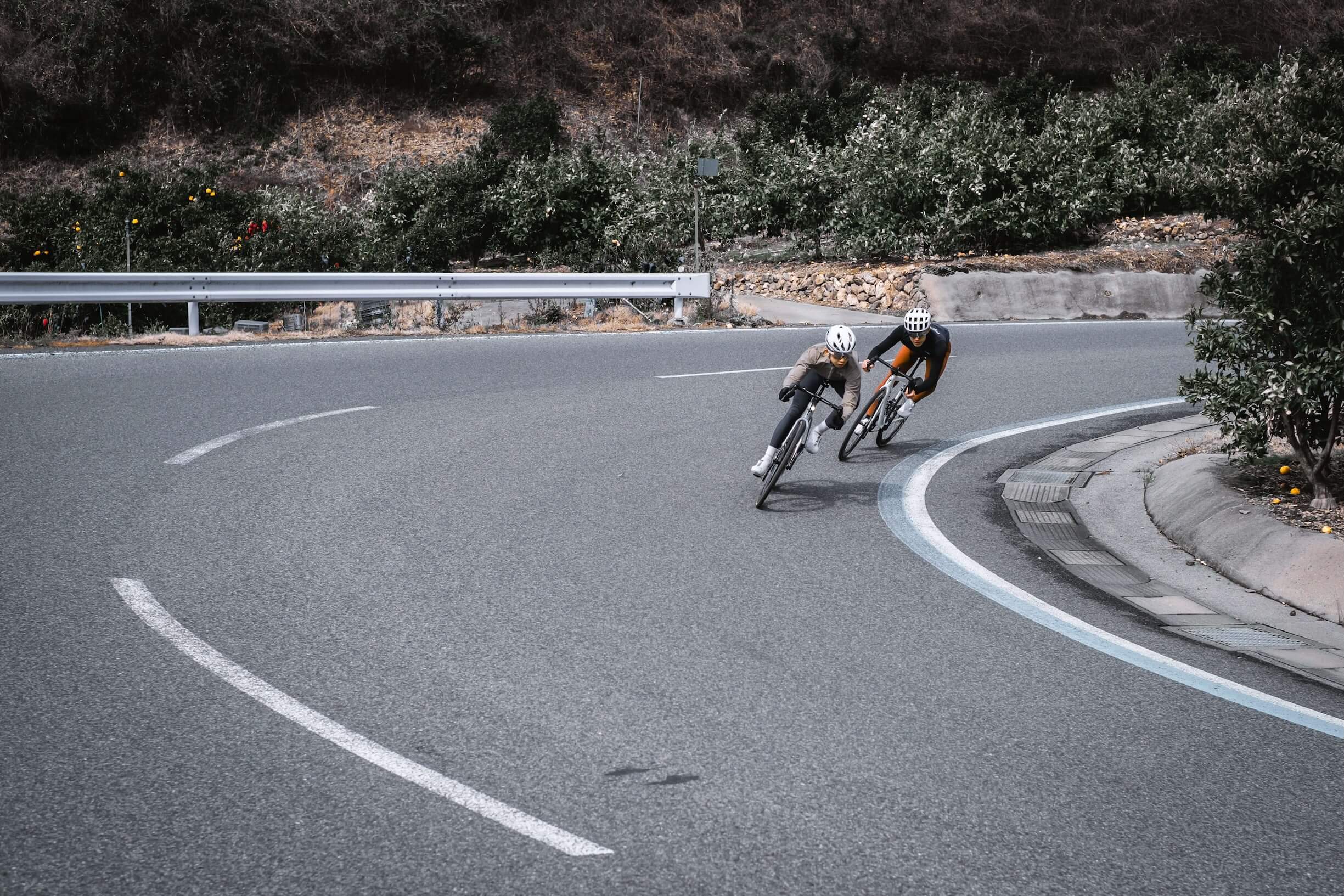
| Ryuji 60kg | From slow corners to fast ones, the handling stays honest and easy across every speed range. You feel the sheer pleasure of piloting the bike. And this isn’t just about racing — it carries over to touring and casual rides just the same. |
| Ozzy 48kg | Even on routes packed with tight corners, line choice is effortless and the bike flicks through direction changes lightly. Mid-corner lean angle adjustments come easy too. This handling has the same vibe as the old rim-brake Shamals and Racing Zeros. |
| Yuta 68kg | It responds honestly from low to high speeds. High-speed corners demand a bit more focus, but on tight switchbacks and the like, holding your intended line is easy. My frame has some quirks in cornering, but these wheels noticeably tame them. |
Quick at low speeds, with a neutral feel that traces your intended line with precision.
Lighter riders will revel in the free-flicking agility through tight corners, while bigger riders may feel a touch of peakiness at high speed, requiring sharper focus.
Overall, though, the handling is so honest it even corrects for frame quirks — and across every scenario, you feel “the joy of piloting.”
The Verdict: The Added Value of the ALPINIST CLX III

| Ryuji 60kg | Effortless to ride solo up to about 35km/h — a wheel that reminds you why riding a bike is fun in the first place. For long rides or hard efforts I’d reach for the RAPIDE, but since most of my rides are solo, the ALPINIST CLX III is what I’d want under me day-to-day. |
| Ozzy 48kg | For solo rides or café rides, you don’t need the spec of the RAPIDE. When you’re not chasing speed, the ride feel beats the RAPIDE — both the flats and the climbs become more enjoyable. |
| Yuta 68kg | Light, lively acceleration and deceleration, honest handling, real comfort. Perfect for relaxed rides, steep climbs, and routes with constant up and down. For those scenarios, I can’t think of a wheel that beats it right now. |
Looking at the road wheel market over the past few years, a turning point comes into focus. Aero-optimised wheels have been shedding weight at a remarkable pace, and now sit at a level virtually indistinguishable from traditional pure climbing wheels. The performance of the RAPIDE CLX III is a perfect symbol of that shift.
In other words, the old binary of “light wheels” vs. “aero wheels” is fading. In the WorldTour, aero road bikes are now ridden even on climb-heavy parcours, and wheels that combine aerodynamics with climbing performance are becoming the new standard. Which raises the question — where does the ALPINIST belong now?
What we felt through our test rides is that the ALPINIST CLX III has redefined its reason for being within that shifting landscape, and offers a new answer. What all three of us kept coming back to wasn’t about racing — it was things like “It just feels good on a normal solo ride” and “The lightness really shows when you hit a climb mid-tour.” That, to us, is proof that this wheel delivers value — the sheer joy of riding — not only to racers, but to every cyclist who throws a leg over a bike.
In an increasingly fierce wheel development race, the further-honed ALPINIST CLX III asserts its identity precisely through that “added value beyond racing.”
Three Riders, Three “Best Wheels”

Through the comparison test, the distinct positioning of the three new models became clear.
When we asked the three riders, “If you had to pick just one, which would it be?”, the answers split with almost surprising clarity. But look at each rider’s context and riding style, and the logic behind those choices is remarkably clean.
Ryuji’s pick (60kg) – ALPINIST CLX III

Ryuji, primarily a solo rider, went with the ALPINIST CLX III. On solo rides, where speeds don’t climb as readily as in a group, the agility of a low-profile rim — the directly felt joy of “working the bike” through every standing start and every change of pace — does more for ride quality than the high inertia of an aero wheel. Paired with his Tarmac SL8, the ALPINIST also has enough headroom to go fast when needed. That balance of practicality and sensation lands squarely in his sweet spot.
Ozzy’s pick (48kg) – RAPIDE CLX III

At 48kg, Ozzy’s choice was — unexpectedly — the all-round aero RAPIDE CLX III. The old assumption was that deep rims meant unmanageable wheels for lighter riders, but the staggering low weight and honest handling of the latest RAPIDE have shattered that conventional wisdom. The fact that even a small-framed rider can fully exploit its aero performance without ever feeling overwhelmed — that trust in the “total package” born of modern equipment evolution — is what guided Ozzy to this wheel.
Yuta’s pick (68kg) – SPRINT CLX

Yuta, whose riding is built around raw power, picked the stiffest of the three — the SPRINT CLX. As the largest rider of the trio at 68kg, he was the one who could just faintly sense an “acceleration ceiling” on the other two wheels under heavy load. On the SPRINT, that ceiling simply doesn’t exist. In sprints above 800W, in cruising past 45km/h, the stiffness translates every watt he puts down into forward motion with zero loss. For a heavier rider, that is what “speed” actually means — a rational choice rooted in physicality.
* * *

There’s no single right answer to “which wheel is the fastest” — but our three riders, each with different builds and pedalling styles, each arrived at their own personal “fastest” from their own angle.
That speaks to the breadth Roval has built into this new three-wheel lineup: whatever your size, whatever your style of riding, there’s an answer in here that will land.
Which one is the fastest for you? Take these three different physical approaches as your reference, and find your own “best wheel.”
Browse Roval wheels (Specialized Official Store)
Find a Roval test-ride location here
Read Part 1 here

text & photo / Ryuji(@ryuji_ride)
edit / Tats(@tats_lovecyclist)


